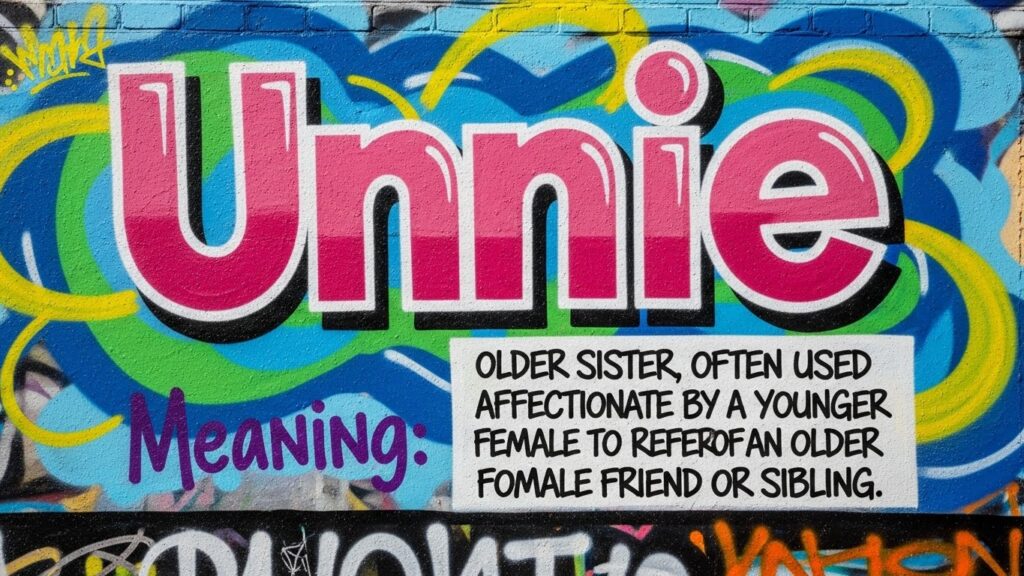

The word “unnie” shows up everywhere today—K-dramas, K-pop fandoms, TikTok comments, and real-life conversations. Many people search for unnie meaning because they hear it often but aren’t fully sure how to use it correctly.
At first glance, it seems simple. But unnie carries cultural rules, emotional layers, and social boundaries that matter deeply in Korean culture. Using it the wrong way can sound awkward—or even disrespectful.
This guide explains the true meaning of unnie, where it comes from, how it’s used today, and why it’s more than just a casual nickname.
Definition & Core Meaning
Unnie (언니) is a Korean term used by females to refer to an older sister or older female they are close to.
Core meanings of unnie:
- Biological older sister
- Older female cousin
- Close older female friend
- Female mentor or senior (in casual settings)
Simple examples:
- “She’s my unnie, even though we’re not related.”
- “Unnie helped me through a hard time.”
- “I really admire you, unnie.”
📌 Important rule:
Only women use the word unnie. Men do not use it.
Historical & Cultural Background
Origins in Korean language
The word unnie comes from traditional Korean family structures where age and hierarchy define relationships. Korean has relationship-based language, meaning words change depending on age, gender, and social roles.
In ancient Korea:
- Respect for elders was essential
- Younger siblings relied on older ones for guidance
- Family terms extended beyond blood relations
Unnie reflected protection, authority, and emotional closeness.
Cultural interpretations
- Korean culture: A mix of respect, affection, and familiarity
- Western cultures: Often misunderstood as “just a cute nickname”
- Global pop culture: Symbol of warmth, fandom, and admiration
As Korean media spread globally, unnie evolved—but its cultural weight remained.
Emotional & Psychological Meaning
Calling someone unnie is not neutral. It carries emotional intention.
Emotional layers behind unnie:
- Trust: You feel safe with that person
- Admiration: You respect their experience
- Belonging: You see them as part of your inner circle
- Support: You expect guidance or comfort
Psychologically, unnie creates a bonded dynamic—one person leads gently, the other receives care.
For many, using or receiving the title brings feelings of warmth, security, and identity.
Different Contexts & Use Cases
1. Personal life
Used among sisters, cousins, or close female friends where age difference exists.
2. Social media & fandoms
Fans often call female idols unnie to express affection and loyalty.
Example:
“Unnie looks so beautiful today!”
3. Romantic-adjacent settings
Sometimes used playfully between women to soften emotional distance—but never romantic by default.
4. Professional or semi-formal spaces
Used cautiously with seniors in creative or casual workplaces, never in formal business communication.
See also: Oppa Meaning Explained
Hidden, Sensitive, or Misunderstood Meanings
Common mistakes people make:
- ❌ Men calling women unnie
- ❌ Using it with strangers
- ❌ Assuming it means “girlfriend”
- ❌ Thinking it’s childish
When meaning changes
- Tone matters: playful vs respectful
- Relationship depth matters
- Cultural awareness matters
Used incorrectly, unnie can sound mocking or overly familiar.
Comparison Section
| Term | Who Uses It | Refers To | Emotional Tone |
|---|---|---|---|
| Unnie | Female | Older female | Warm, respectful |
| Oppa | Female | Older male | Affectionate |
| Noona | Male | Older female | Respectful |
| Hyung | Male | Older male | Loyal |
Key Insight:
Korean relationship terms reflect both age and gender—ignoring either changes the meaning entirely.
Popular Types / Variations of “Unnie”
- Real Unnie – Biological older sister
- Bestie Unnie – Close older friend
- Work Unnie – Senior colleague in casual settings
- Idol Unnie – Female celebrity admired by fans
- Gaming Unnie – Older female gamer in online communities
- Campus Unnie – Senior student guiding juniors
- Neighborhood Unnie – Familiar older woman nearby
- Protective Unnie – Acts like a guardian
- Soft Unnie – Emotionally nurturing personality
- Cool Unnie – Confident, stylish role model
How to Respond When Someone Asks About It
Casual response
“It means older sister in Korean.”
Meaningful response
“It’s a respectful way for women to address older women they feel close to.”
Fun response
“It’s like calling someone your built-in life guide.”
Private or cultural response
“It shows trust, affection, and respect—so it’s not used lightly.”
Regional & Cultural Differences
Western usage
- Often informal
- Used mainly in fandoms
- Cultural rules sometimes ignored
Asian contexts
- Korea: Strict rules
- Japan/China: Similar age-based terms exist
- Southeast Asia: Adopted through pop culture
Middle Eastern & African parallels
- Respect-based titles for elders
- Family terms extend to community members
Latin cultures
- Emotional closeness through age titles
- Similar warmth but less linguistic structure
FAQs About Unnie Meaning
1. Can men say unnie?
No. Men use noona instead.
2. Is unnie romantic?
No. It’s familial or affectionate, not romantic.
3. Can foreigners use unnie?
Yes, if used respectfully and correctly.
4. Is unnie formal or informal?
Informal but respectful.
5. Can you call someone unnie online?
Yes, common in fandoms—but context matters.
6. Is it rude to stop using unnie?
Not rude, but it may signal emotional distance.
Conclusion
The unnie meaning goes far beyond “older sister.” It represents trust, respect, emotional safety, and cultural identity. Whether spoken softly between siblings or typed lovingly by fans, the word carries intention.
Understanding unnie isn’t just about language—it’s about connection. When used thoughtfully, it honors relationships and bridges generations.
Language shapes how we relate to people. Unnie reminds us that respect can sound warm, not distant.