
Language online evolves faster than ever. New slang appears, old terms get sharper meanings, and short phrases suddenly carry serious emotional weight. One term that keeps popping up in texts, comments, and viral posts is BFFR.
People search for “BFFR meaning” because the phrase feels blunt, confusing, and context-heavy. Sometimes it sounds funny. Other times it feels harsh or even dismissive.
By the end of this guide, you’ll understand exactly what BFFR means in 2026, how people use it, when it’s playful versus rude, and how to respond without sounding awkward or out of touch.
Definition & Core Meaning
BFFR is a modern slang acronym that stands for:
“Be F*ing For Real.”**
It’s used to express disbelief, sarcasm, or frustration when someone says something unrealistic, exaggerated, or hard to take seriously.
Core meanings of BFFR:
- Calling out exaggeration
- Expressing disbelief
- Challenging honesty or realism
- Reacting to absurd claims
Simple examples in context:
- “You think you’ll finish all that tonight? BFFR.”
- “He said he forgot my birthday again. BFFR.”
- “You’re quitting after one bad day? BFFR.”
Tone matters. BFFR can sound playful or cutting depending on who says it and how.
Historical & Cultural Background
Unlike ancient words or symbolic phrases, BFFR has a clear digital origin.
Early roots
- Emerged in Black American Vernacular English (AAVE) spaces
- Gained traction on Twitter (X), TikTok, and Instagram
- Became popular through memes, reaction videos, and captions
Cultural significance
- Used as a reality check phrase
- Reflects frustration with exaggeration culture
- Matches a broader shift toward direct, unfiltered communication
Why it stuck
Modern internet culture values:
- Brevity
- Emotional honesty
- Relatable reactions
BFFR delivers all three in four letters.
Emotional & Psychological Meaning
Beyond slang, BFFR reflects a mindset.
Psychological layers behind BFFR:
- Boundary-setting: rejecting nonsense or emotional labor
- Self-respect: refusing to entertain unrealistic narratives
- Emotional fatigue: calling out repeated patterns
- Reality grounding: bringing conversations back to truth
For many users, especially younger generations, BFFR is less about rudeness and more about protecting mental energy.
It’s not just what’s said. It’s what someone refuses to engage with.
Different Contexts & Use Cases
Personal life
Used among friends when someone is joking, dramatic, or exaggerating.
- “You’re moving after one argument? BFFR.”
Tone: playful, familiar.
Social media
Extremely common in comments and captions.
- Reacting to influencer claims
- Responding to unrealistic advice
- Meme punchline
Tone: sarcastic, humorous, sometimes harsh.
Relationships
Used carefully, often signals frustration.
- “You said you’d change last time. BFFR.”
Tone: serious, emotional, confrontational.
Professional or modern usage
Rare in formal work settings but appears in:
- Group chats
- Creative industries
- Casual Slack conversations
Tone: risky unless rapport exists.
Hidden, Sensitive, or Misunderstood Meanings
BFFR often gets misunderstood.
Common misconceptions:
- ❌ “It always means anger”
- ❌ “It’s just a joke”
- ❌ “Anyone can say it casually”
Sensitive considerations:
- Comes from AAVE, misuse can feel performative
- Can sound dismissive if power dynamics exist
- Feels harsher in written form than spoken
When tone isn’t clear, BFFR can escalate conflict fast.
Comparison Section
| Term | Meaning | Tone | Usage Context |
|---|---|---|---|
| BFFR | Be serious / realistic | Blunt, sarcastic | Texts, social media |
| Be fr | Be for real | Softer | Casual chats |
| Seriously? | Questioning truth | Neutral | Any setting |
| No way | Disbelief | Light | Friendly talk |
| You’re joking | Doubt | Playful | Informal |
Key Insight:
BFFR is the most emotionally charged option. It delivers disbelief with attitude.
Popular Types / Variations of BFFR
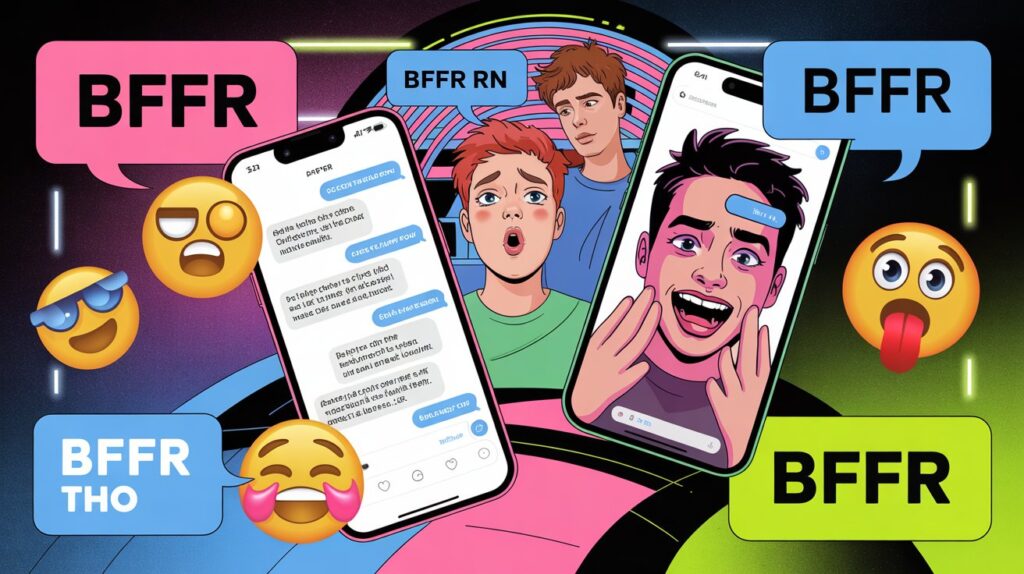
- “Bffr 😭” – Disbelief mixed with humor
- “BFFR RN” – Urgent frustration
- “Like bffr” – Sarcastic emphasis
- “Bffr pls” – Softened challenge
- “BFFR fr” – Double emphasis on realism
- “Bffr with me” – Emotional honesty request
- “BFFR…” – Silent judgment
- “Bffr tho” – Casual disbelief
- “BFFR bc what?” – Confusion plus sarcasm
- “Bffr bestie” – Playful but pointed
Each variation shifts tone slightly without changing core meaning.
How to Respond When Someone Uses BFFR
Casual responses
- “Okay, fair.”
- “You’re right.”
- “Yeah, I know.”
Meaningful responses
- “I hear you. Let me explain.”
- “I wasn’t being realistic.”
- “That’s on me.”
Fun responses
- “Alright, reality check accepted.”
- “No lies detected.”
- “Caught me.”
Private or sensitive responses
- “Can we talk about this calmly?”
- “That came off strong.”
- “I didn’t mean it that way.”
Your response sets the tone moving forward.
Regional & Cultural Differences
Western usage
- Heavy in Gen Z and Millennials
- Casual, meme-driven
- Often sarcastic
Asian digital spaces
- Used mainly in English-speaking communities
- Often softened with emojis
- Less confrontational
Middle Eastern contexts
- Less common
- May feel disrespectful if misunderstood
- Used mostly among close friends
African & Latin communities
- Growing usage via TikTok
- Often humorous
- Integrated with local slang
Context always matters more than geography.
Frequently Asked Questions (FAQs)
What does BFFR stand for?
It means “Be F*ing For Real.”**
Is BFFR rude?
It can be. Tone, relationship, and context decide.
Can BFFR be used jokingly?
Yes. Many people use it playfully with friends.
Is BFFR appropriate at work?
Usually no, unless the environment is very informal.
Is BFFR Gen Z slang?
Primarily, but Millennials also use it online.
Does BFFR always mean anger?
No. It often signals disbelief or humor.
Conclusion
BFFR in 2026 isn’t just slang. It’s a reflection of modern communication. Direct. Emotional. Unfiltered.
It calls out exaggeration, protects boundaries, and demands honesty. Used right, it’s funny and relatable. Used wrong, it can feel dismissive or harsh.
Understanding when and how to use BFFR helps you stay fluent in digital culture without crossing social lines.
Language keeps changing. Awareness keeps you connected.